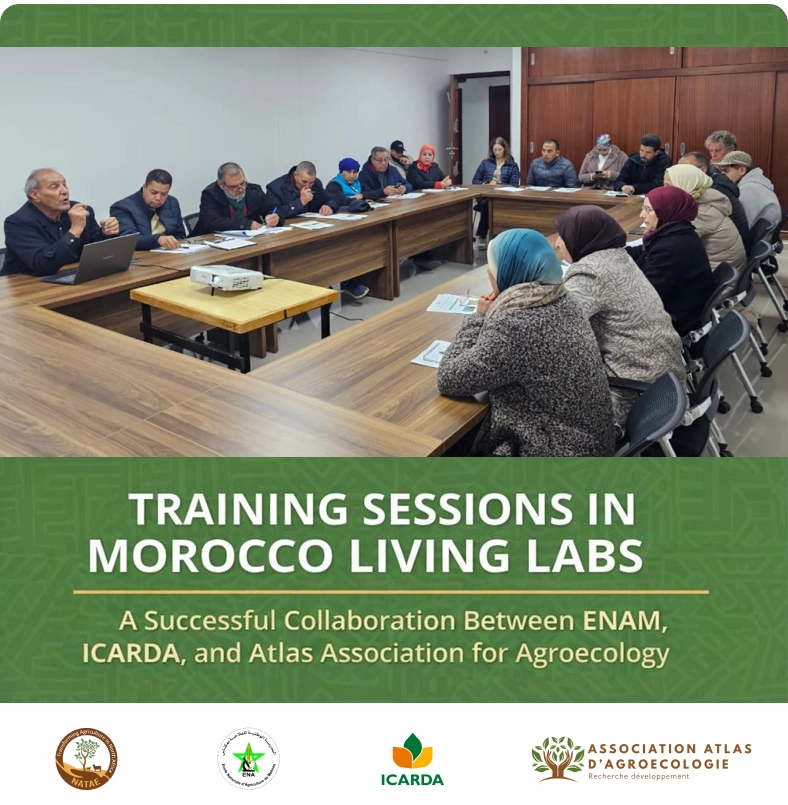
8 et 9 décembre 2025 | MOROCCO LIVING LABS
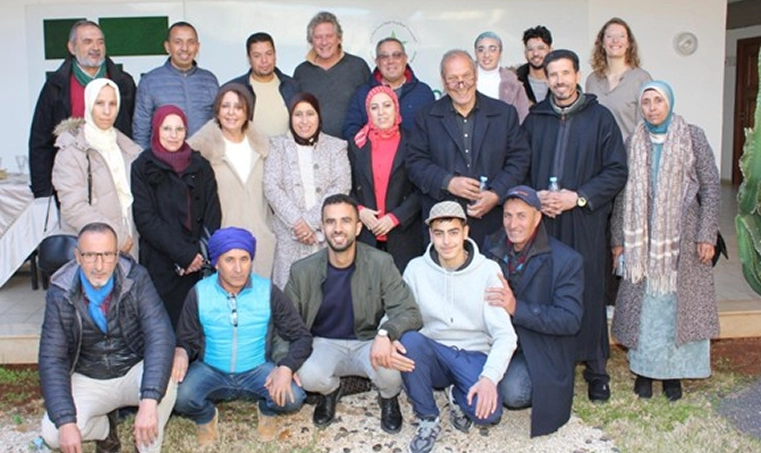
Dans le cadre du projet NATAE, l'École nationale d'agriculture de Meknès (ENAM), en collaboration avec l'ICARDA et l'Association Atlas pour l'agroécologie, a organisé un programme de formation intensive pour 20 participants des Living Labs de Skoura M'Daz et d'Aït Othmane les 8 et 9 décembre 2025. Le programme a été conçu comme un voyage progressif, commençant par des sessions théoriques complètes pour établir les concepts agroécologiques de base avant de passer à des applications pratiques sur le terrain.
Le programme comprenait quatre sessions de formation spécialisées :
- Formation 1 : Introduction à l'agroécologie : pratiques pour le sol, l'eau et la biodiversité
préservation.
- Formation 2 : Fertilisation organique et compostage : Transformer les débris de cultures en engrais.
- Formation 3 : Marketing et commercialisation des produits agroécologiques.
- Formation 4 : Techniques de multiplication des plantes sous serre.
Le 8 décembre 2025, à la ferme de démonstration de Jenan Lalla Yamna, choisie comme plateforme in situ pour immerger les participants dans un écosystème durable, le programme a débuté par deux sessions de trois heures.
Le Pr. Ghizlane Echchgadda, enseignant-chercheur à l'ENA de Meknès et responsable du Living Lab de Skoura, et M. Abdelaziz Ngadi, ingénieur agronome et directeur de la ferme d'accueil, ont animé la première session sur l'introduction à l'agroécologie, en mettant l'accent sur la restauration de la fertilité des sols, la conservation de l'eau et la biodiversité. Cette session a été suivie d'une formation de trois heures sur la fertilisation organique et le compostage, animée par M. Ngadi, qui a fourni des techniques pratiques pour transformer les débris de cultures en engrais naturels. La journée s'est achevée par une visite de la ferme, qui a permis aux agriculteurs d'observer les applications pratiques de diverses pratiques agroécologiques telles que l'association de cultures et le recyclage de la biomasse.
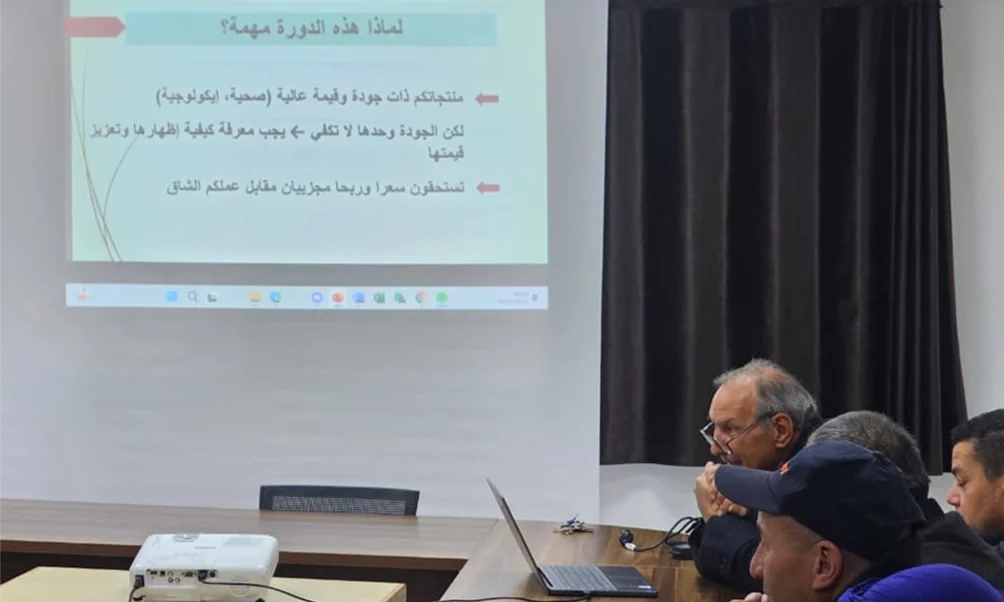
Le 9 décembre 2025, le programme s'est déplacé à l'École nationale d'agriculture de Meknès pour une session de deux heures sur le marketing et la commercialisation des produits agroécologiques. Au cours de cette session, le Pr. Hajib El Kasmi du département d'économie rurale a utilisé le cadre du "Mix Marketing" (4 P) pour enseigner aux participants comment transformer la qualité des récoltes agroécologiques en un avantage compétitif clair. La formation s'est concentrée sur l'optimisation du produit, le choix de canaux de distribution stratégiques tels que la vente directe à la ferme, et l'utilisation d'outils de promotion tels que les plateformes de médias sociaux et le bouche-à-oreille pour atteindre les clients.
En outre, les agriculteurs ont appris des stratégies pour fixer les prix et comprendre les étiquettes (Bio, SPG) afin d'assurer la viabilité économique et la durabilité à long terme de leurs exploitations. Le programme de formation s'est achevé par une session pratique de 3 heures sur la multiplication des plantes sous serre qui s'est tenue à la pépinière d'application, où le directeur M. Mounaim a enseigné des techniques essentielles pour la multiplication végétative et la gestion du climat de la pépinière.
En comblant le fossé entre la théorie et la pratique, cette initiative multipartite a permis d'améliorer considérablement
renforce la résilience technique et organisationnelle des communautés rurales confrontées aux défis climatiques et socio-économiques.