
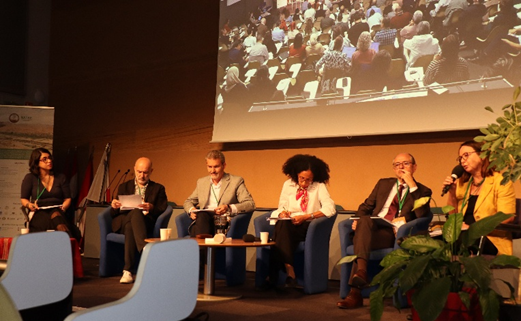
NATAE Policy Conference, in association with the Dionysus project “What scientific and political mechanisms for the future of agroecological transition in the Mediterranean region? Transdisciplinarity, assessments and scaling up”
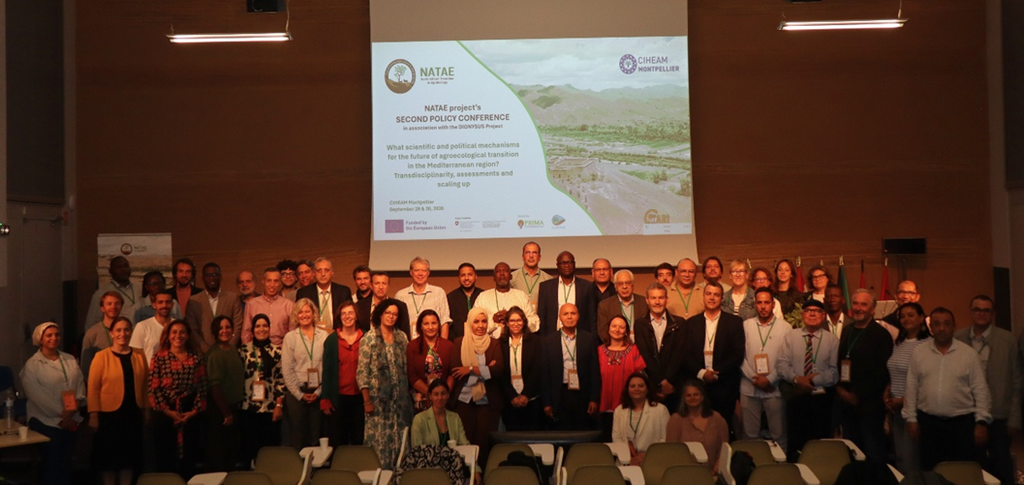
On 29 and 30 September 2026, the Mediterranean Agronomic Institute of Montpellier hosted the regional conference of the Horizon Europe NATAE project, organised in collaboration with CARI and the Dionysus PRIMA project, on agroecology in the Mediterranean, “What scientific and political mechanisms for the future of agroecological transition in the Mediterranean region? Transdisciplinarity, assessments and scaling up”.
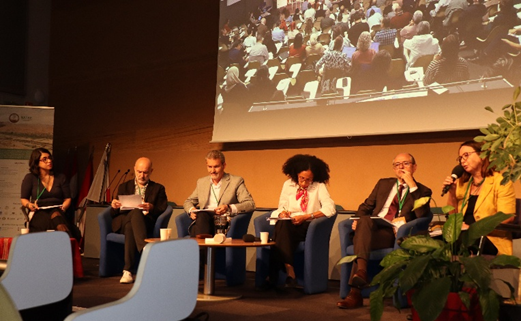
Its main objective was to stimulate a collective dynamic of multi-stakeholder, multi-country and multi-territory exchange in order to develop research and action perspectives to better anchor agroecology in Mediterranean policies and territories; with agroecology framed as a systemic approach, a major strategy for adapting agriculture to the effects of climate change in many territories of the region, but also as an essential vector for food systems that serve public health.
The specific objectives were to explore current policies, scenarios and policy options potentially favourable to agroecology; to assess the multidimensional benefits of agroecological practices on farms and in territories; to explore the transdisciplinary processes of the NATAE project’s living labs and of other ongoing initiatives, and to analyse their impacts on local food security and the local economy; and, finally, to work on ways of scaling up the most relevant initiatives.
Over 120 stakeholders from across the Mediterranean region took part in the event, representing all five countries of North Africa, from Algeria, Egypt, Mauritania, Morocco and Tunisia, several regions of France, Lebanon and Libya, as well as Italy, Spain, Germany, Portugal, Switzerland, the United States, South Africa, Senegal, and Ivory Coast. They represented a wide diversity of organisations including Mediterranean and European agricultural research and training institutes and centres working across a range of disciplines, national development agencies, associations and civil society organisations, cooperatives and producers, also local and regional authorities from France and Mauritania, and international development and cooperation organisations, along with other regional and international bodies. Participants were selected for their commitment to agroecology and their ability to initiate and contribute to a reflective dialogue, drawing on their respective experiences.
Over two days, the participants were able to explore the different facets of agroecology in North Africa, compare perspectives and share experiences across countries and territories. This exchange enabled them to draw collective lessons and build new connections, helping to raise greater awareness of the value of systemic approach to agroecology for Mediterranean territories in a context of adaptation to climate change.
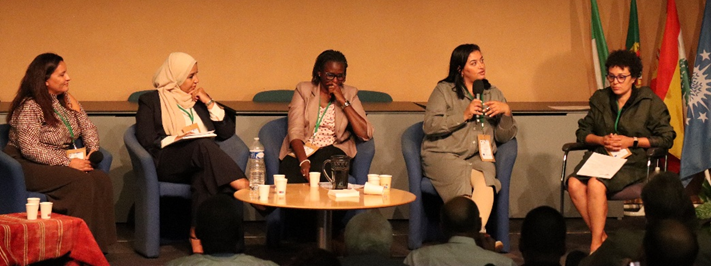
The conference was opened by a French member of parliament and by representatives of the Occitanie region, the Aude department and Montpellier Metropole, who stressed the value of agroecology for the sustainable development and planning of their territories in a context of uncertain climate, and the opportunities it offers for implementing the ecological shift needed for a common future, and as a vector of public health through better nutrition.
Attending policy-makers and researchers recognised the need to better integrate agroecology into national research and higher education programmes in North African countries, an essential step, on the one hand, to capitalise on local knowledge and improve existing agroecology models based on territorial specificities and, on the other, to train a new generation of researchers and practitioners in systemic approaches and the co-construction of knowledge for the future of food and agriculture in the Mediterranean.
The link between agroecology and education was also highlighted by the contribution of a Mauritanian elected official who has implemented a pilot school canteen project based on local sourcing from small-scale agroecological producers, simultaneously improving the health, schooling and education of children in his municipality.
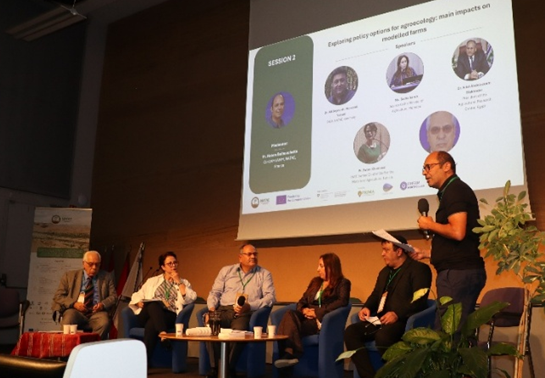
Agroecology ultimately emerged as a major cultural lever for the Mediterranean, through the promotion and enhancement of many local agricultural and food-related forms of knowledge: preparing typical dishes, which helps preserve certain local varieties, and processing and adding value to heritage products.
The need to recognise and strengthen this knowledge brought forward the question of collective and territorial organisation, in connection with market access, as well as that of exchanges between territories and regions through dedicated networks. Several of the civil society organisations present illustrated their expertise and their ability to structure such collectives by recounting their experience.
Finally, the collaboration of researchers was recognised by all participants as indispensable: to provide development partners with evidence of the many benefits of agroecology; to support, assess or help structure ongoing actions in producer networks; and to encourage more targeted support from public policy for small-scale farmers, for example by covering the short-term costs and risks associated with this transition.
Contact: Dr Mélanie REQUIER-DESJARDINS, NATAE Project Scientific Coordinator, CIHEAM-IAM Montpellier