
April 9th, 10th and 11th, 2026 | MOROCCO LIVING LABS
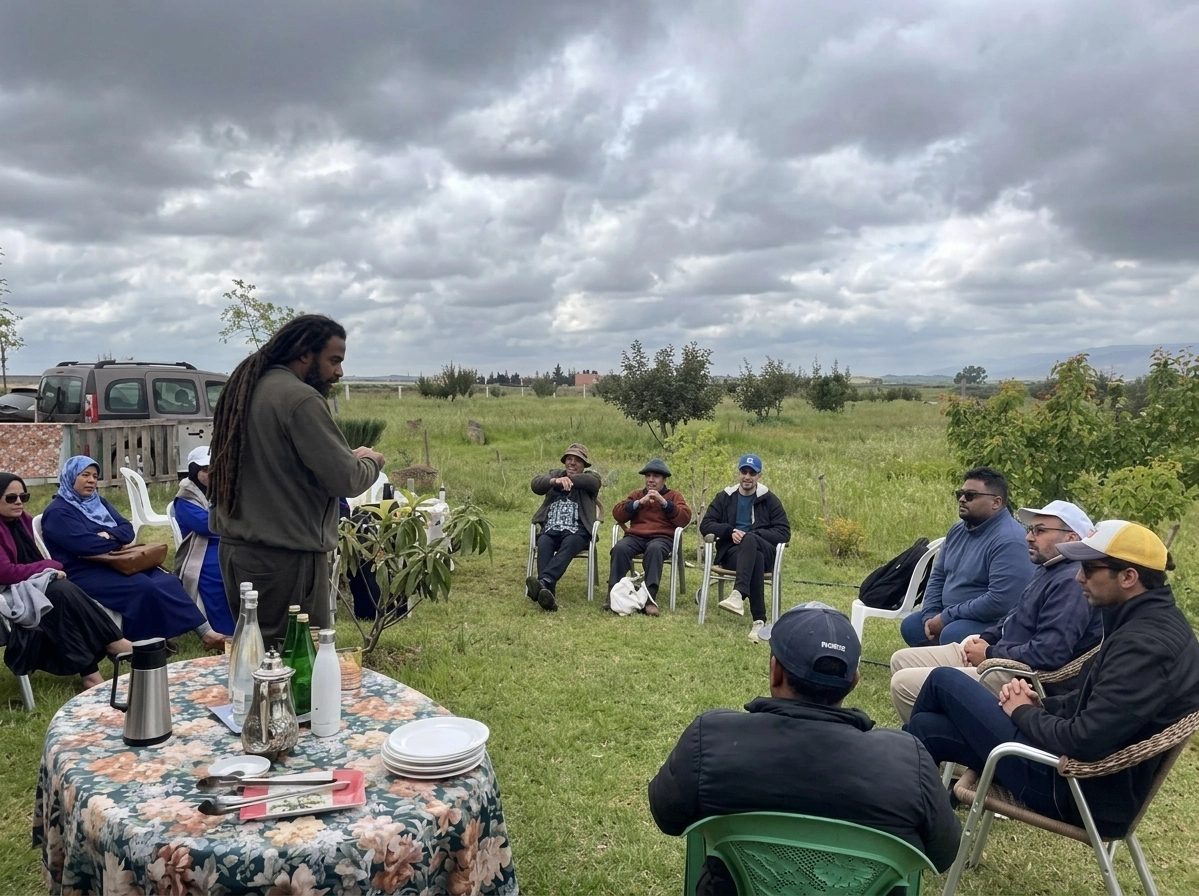
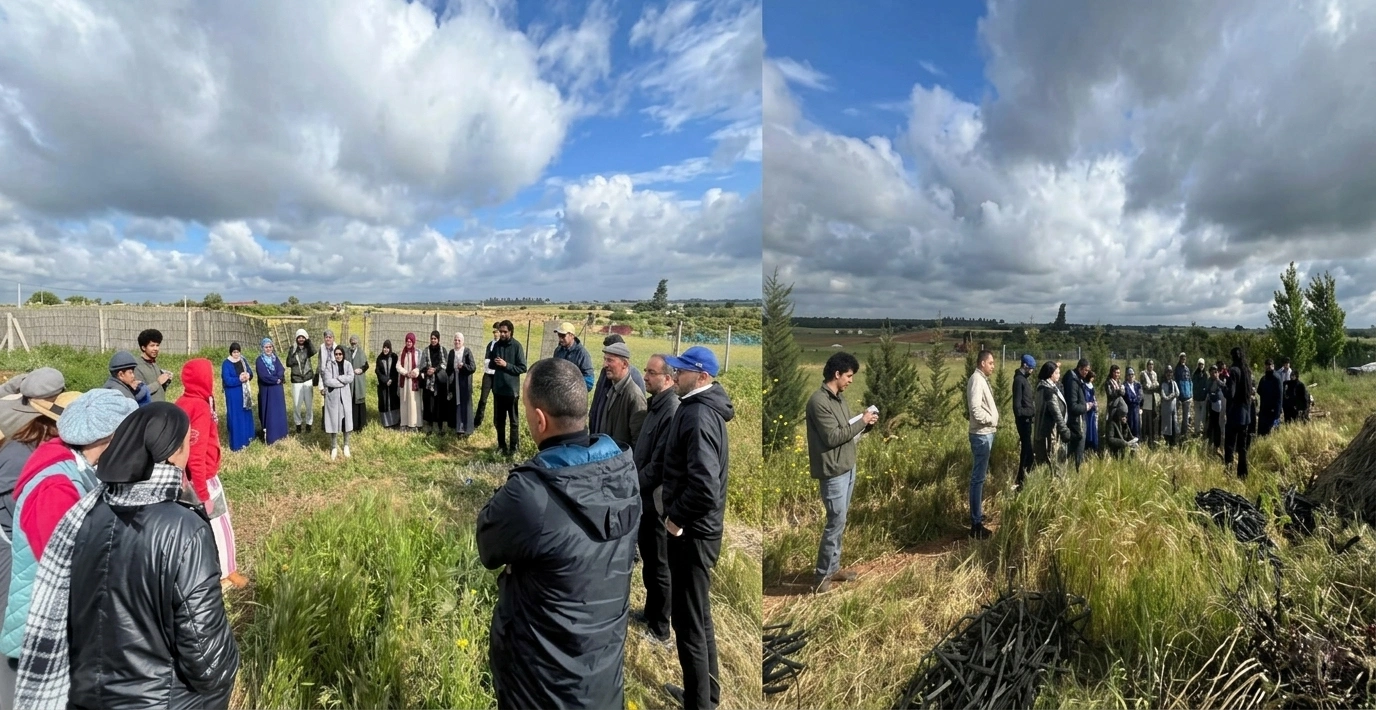
Within the framework of the NATAE (North African Transition to AgroEcology) project, a three-day training program was organized to strengthen the technical and practical capacities of farmers from the Living Labs of Ait Othmane and Skoura M’Daz.
Coordinated by the National School of Agriculture in Meknes (ENA) in collaboration with The Network of Agro-Ecological Initiatives in Morocco (RIAM), this training aimed to support the transition towards sustainable and resilient agricultural systems based on agroecological principles.
The program was designed as a progressive learning pathway, combining theoretical foundations with practical field applications adapted to the local context.
The training program covered three main thematic areas:
- Day 1: Foundations of Agroecology
Participants were introduced to key agroecological concepts, including soil degradation, biodiversity loss, and sustainable farming challenges. A participatory diagnosis helped identify local constraints and opportunities.
- Day 2: Soil and Water Management
This session focused on improving soil fertility and health through organic matter management and regenerative practices such as composting, mulching, crop rotation, and cover crops. Practical workshops also addressed efficient irrigation techniques and water conservation strategies.
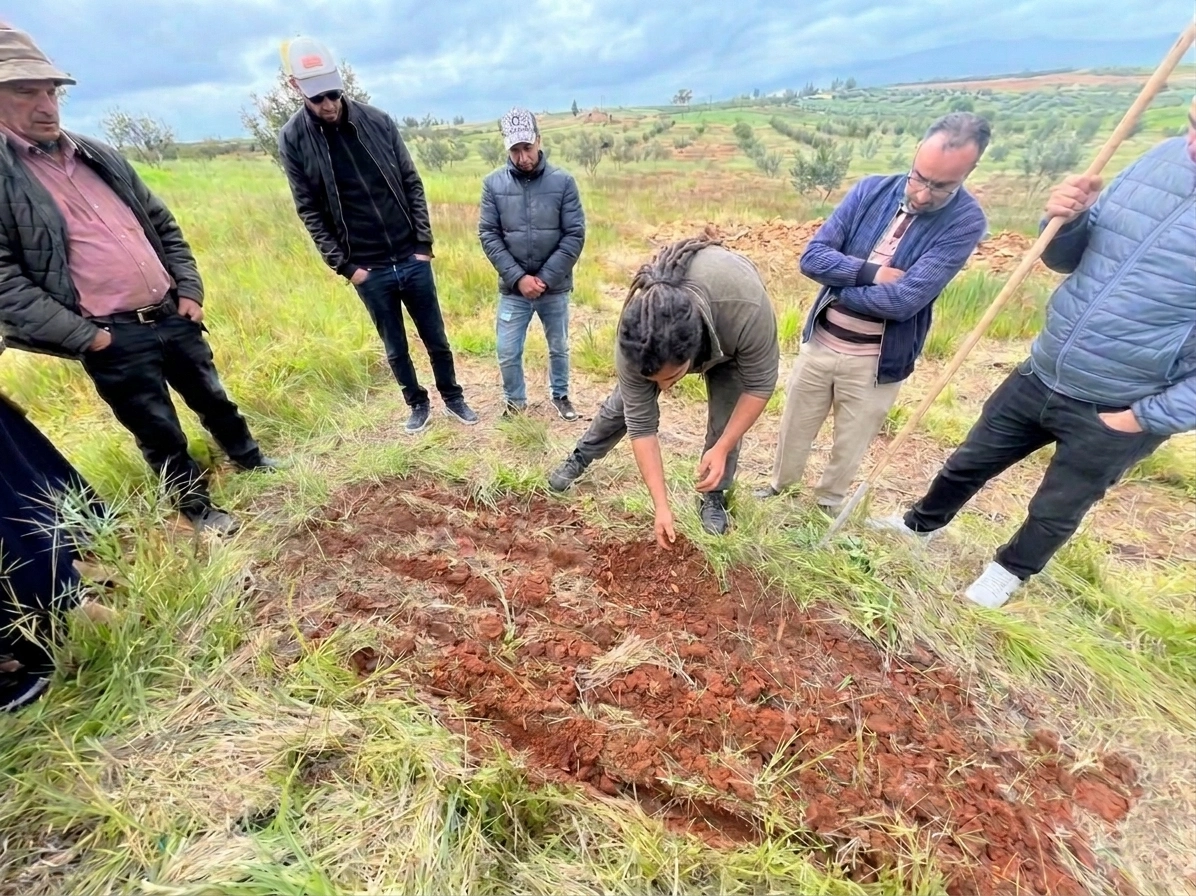
- Day 3: Agricultural Biodiversity and Crop Protection
Farmers explored crop diversification strategies, including crop associations and agroforestry systems, as well as ecological pest management approaches based on natural balance and the use of repellent and attractive plants.
Impact and Key Outcomes
This multi-actor training initiative contributed to:
- Strengthening farmers’ technical skills in agroecology
- Promoting sustainable soil and water management practices
- Enhancing the integration of biodiversity in farming systems
- Supporting the adoption of climate-resilient agricultural practices
- Encouraging knowledge exchange and collective learning
